
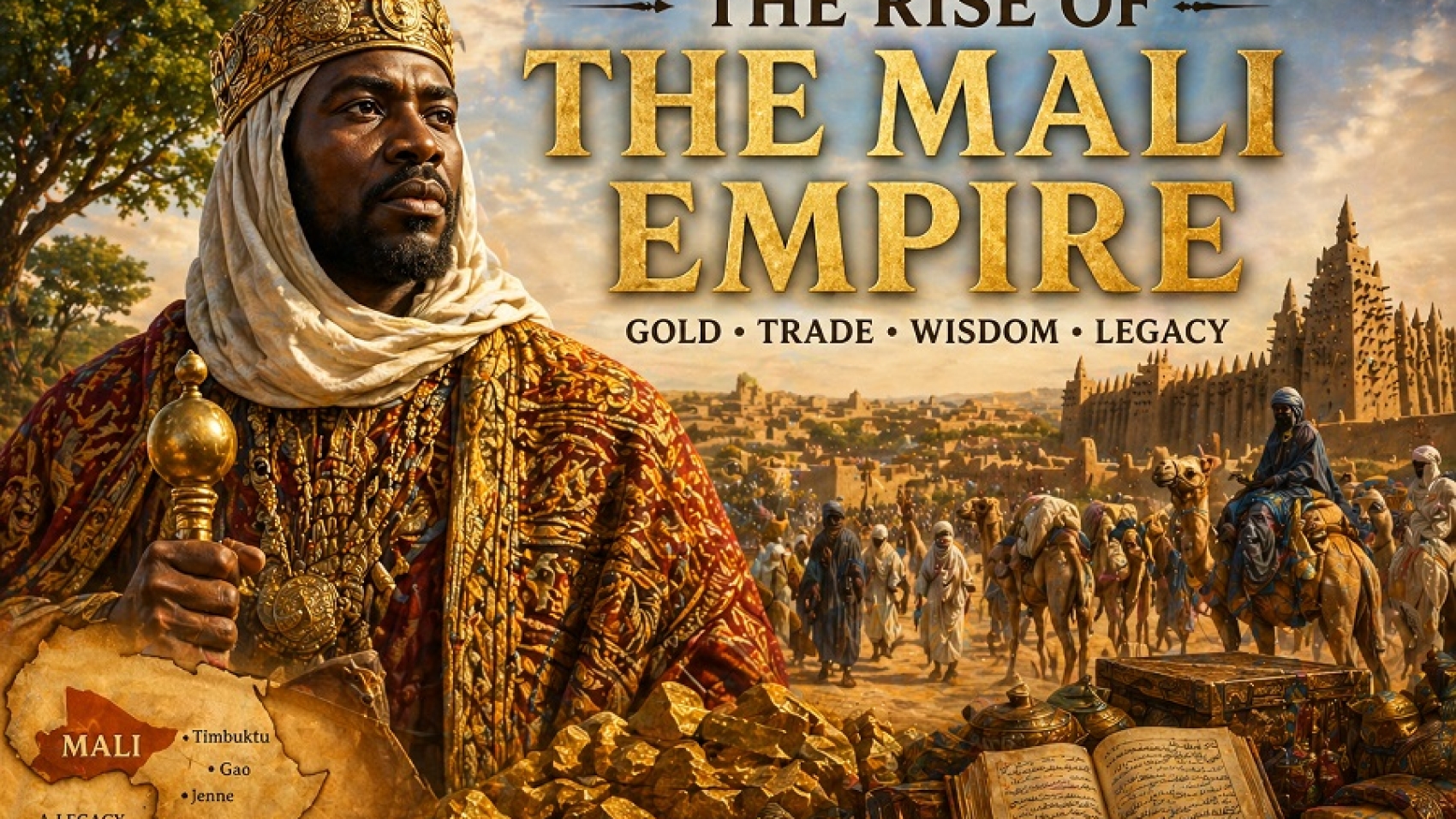
The story of the Mali Empire is not just history—it’s a thunderclap across time. Rising from the savannas of West Africa in the 13th century, Mali became one of the most powerful and wealthy empires the world had ever seen. Built on gold, strengthened by trade, and guided by visionary leadership, its ascent reshaped African and global history.
The Fall of Ghana and the Seeds of Mali
Before Mali rose, the region was dominated by the Ghana Empire. But by the early 1200s, Ghana had weakened due to internal strife and external pressures. This power vacuum created fertile ground for a new force to emerge.
Small Mandinka kingdoms began to stir, like embers waiting for a spark. That spark came in the form of a determined leader who would change everything.
Sundiata Keita: The Lion King of Mali
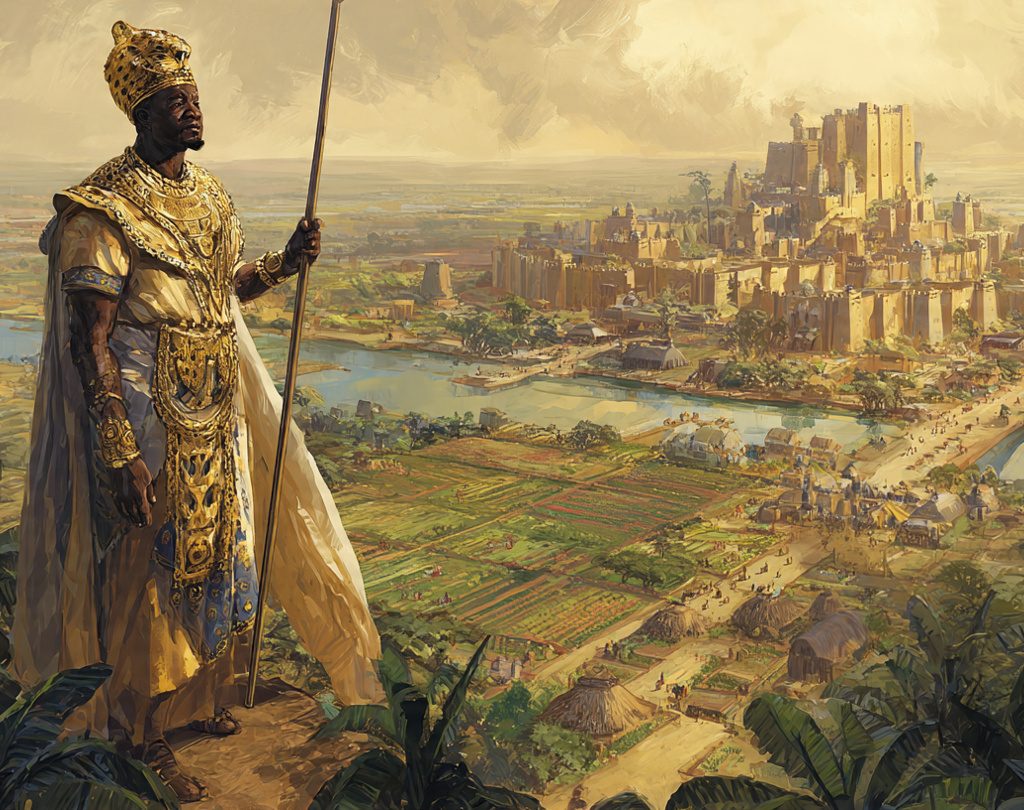
At the heart of Mali’s rise stands Sundiata Keita, a figure wrapped in legend and history. Once an exiled prince, Sundiata returned to reclaim his destiny and unite the Mandinka people.
His defining moment came at the Battle of Kirina around 1235, where he defeated the powerful Sosso king, Sumanguru Kanté. This victory didn’t just win a war; it birthed an empire.
Sundiata then established a centralized government, promoted agriculture, and laid the foundation for a stable and prosperous state. His leadership turned scattered territories into a unified force.
Gold: The Empire’s Beating Heart
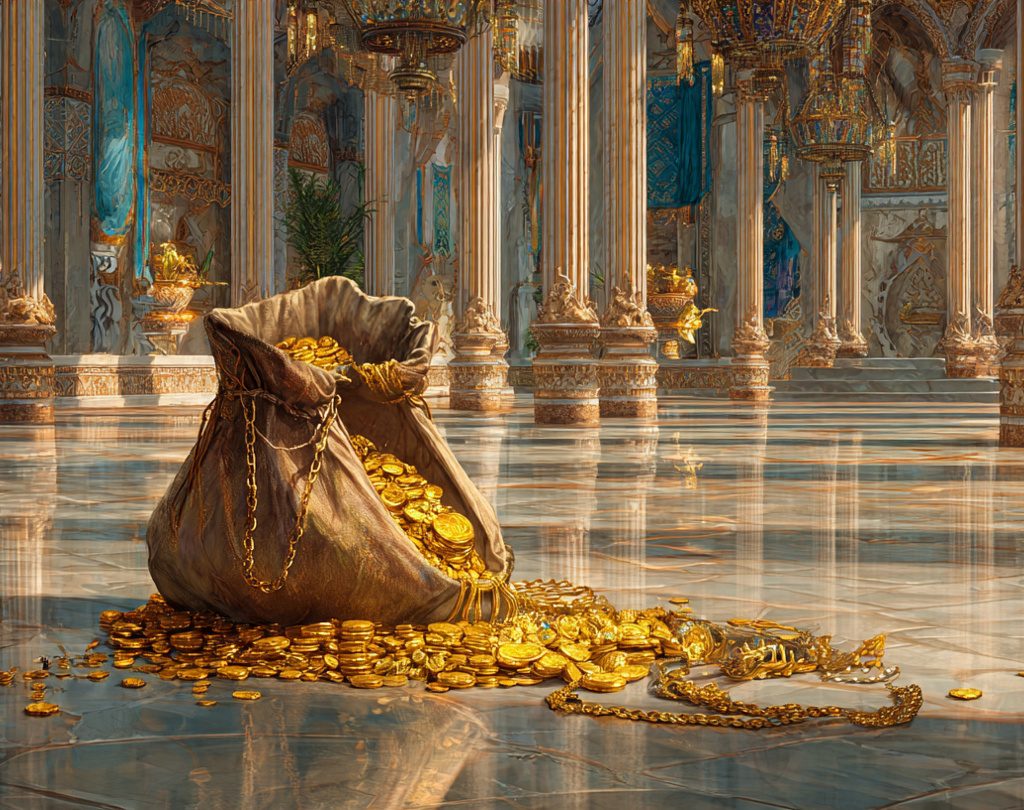
If Mali had a heartbeat, it pulsed with gold.
The empire controlled some of the richest gold mines in the world, particularly in regions like Bambuk and Bure. At a time when gold was the backbone of global trade, Mali became a magnet for merchants from North Africa and beyond.
Gold flowed out. Wealth flowed in.
But Mali wasn’t reckless. The rulers carefully regulated gold supply, maintaining its value and ensuring long-term prosperity.
Trade Routes and Economic Power
Mali’s strategic location gave it control over major trans-Saharan trade routes. Caravans loaded with salt, gold, ivory, and textiles crossed vast deserts, linking West Africa to the Mediterranean and the Middle East.
Cities like Timbuktu and Gao blossomed into bustling centers of commerce and learning. These weren’t just markets—they were melting pots of culture, ideas, and innovation.
Mansa Musa: The Emperor Who Amazed the World
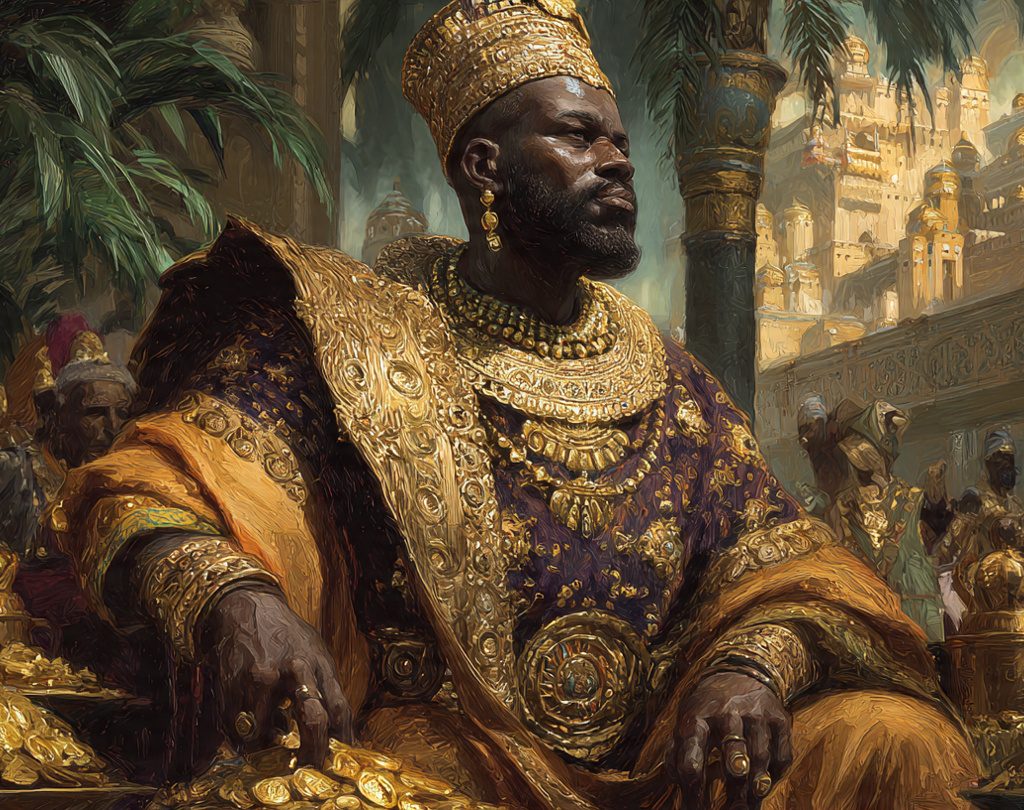
No discussion of Mali’s rise is complete without Mansa Musa, arguably the richest man in history.
His famous pilgrimage to Mecca in 1324 turned heads across continents. Traveling with a caravan of thousands and distributing gold generously along the way, he unintentionally caused inflation in regions like Egypt.
But Musa’s legacy goes beyond wealth. He invested heavily in education, architecture, and religion. Under his rule, Timbuktu became a renowned center of Islamic scholarship, attracting scholars from across the world.
Governance and Stability
Mali’s success wasn’t just luck or resources—it was structure.
The empire was divided into provinces, each governed by appointed officials who reported to the emperor. This system ensured order across vast territories.
Local leaders retained some authority, creating a balance between central control and regional autonomy. It was governance with both backbone and flexibility.
Cultural and Intellectual Flourishing
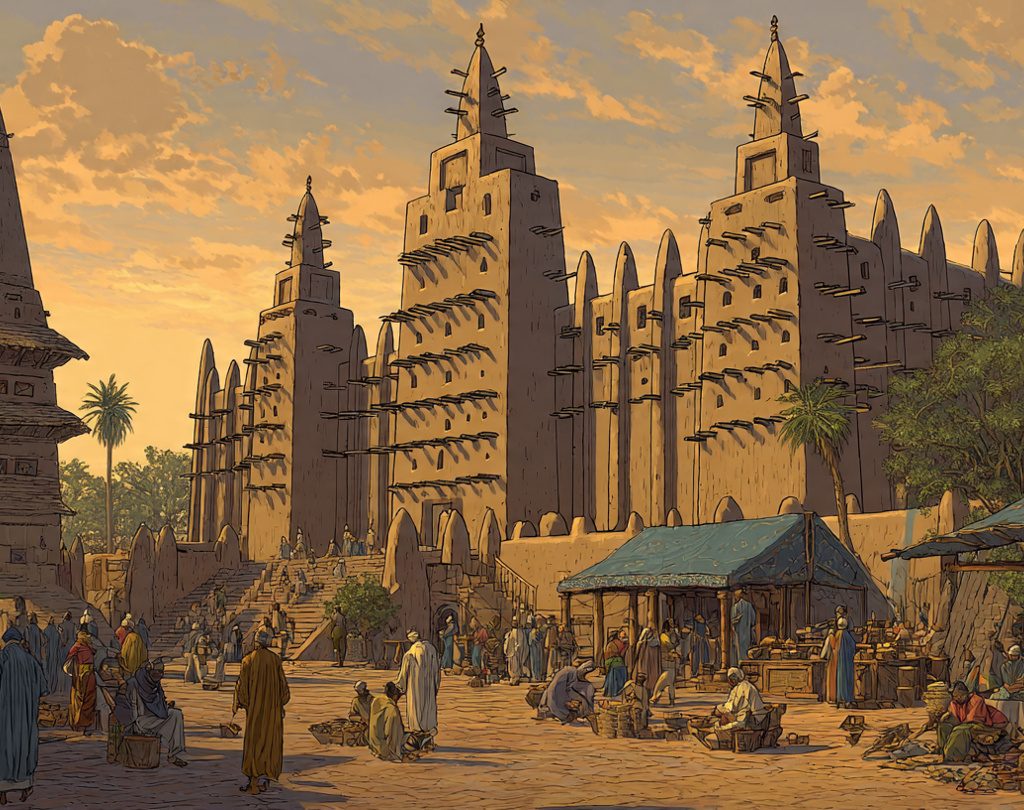
As Mali grew richer, it also grew wiser.
Islam played a significant role in shaping the empire’s culture, especially among the elite. Mosques, libraries, and universities flourished. Timbuktu’s Sankore University became one of the most respected centers of learning in the medieval world.
Scholars studied law, astronomy, mathematics, and literature—turning Mali into a beacon of knowledge.
The rise of the Mali Empire is a story of transformation—of how leadership, resources, and strategic thinking can turn a fragmented region into a global powerhouse.
From Sundiata’s resilience to Mansa Musa’s dazzling influence, Mali didn’t just rise—it roared. Its legacy still echoes today, reminding the world that Africa has long been a cradle of power, wealth, and wisdom.