

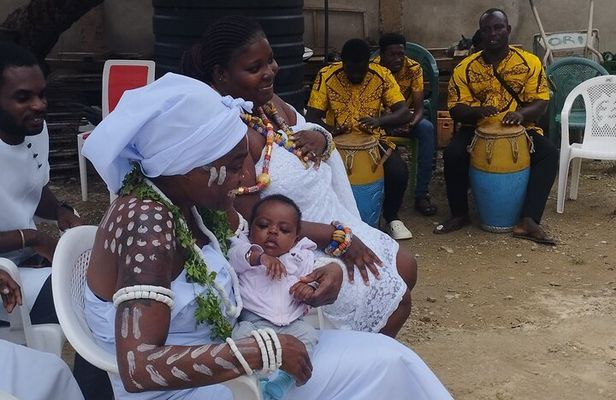
Across many African societies, a child’s name is never just a label. It is a story, a prayer, a prophecy, and sometimes even a warning wrapped into a few carefully chosen syllables. Naming ceremonies across the continent are deeply rooted in culture and spirituality, and although the details differ from one ethnic group to another, the heartbeat is the same: identity begins with meaning.
From West Africa to East Africa, from the Sahel to the southern regions, African naming ceremonies reflect a shared belief that a name shapes destiny. It is not simply what a child is called. It is what the child is believed to become.
The Spiritual Weight of Naming in African Culture
In many African traditions, a newborn is considered a visitor from the spiritual world. The naming ceremony is the moment that visitor is formally introduced to the physical world and welcomed into the community.
Among the Yoruba of Nigeria, for example, naming ceremonies known as “Ìsomolórúko” usually take place on the seventh day after birth for boys and the eighth day for girls. Family elders gather, prayers are offered, and multiple names are given. Each name reflects circumstances around the birth, family hopes, or divine acknowledgment. A child might be named “Taiwo” meaning the first twin to taste the world, or “Folashade” meaning wealth honors the crown.
The act is communal. It is not just parents deciding. It is grandparents, religious leaders, and extended family speaking life into the child.
West African Naming Traditions and Their Deep Symbolism
Across West Africa, naming ceremonies are rich with symbolism and ritual.
Among the Akan people of Ghana, children are often named based on the day of the week they are born. A boy born on Friday might be named Kofi, while a girl born on the same day might be Afia. This system connects identity to time itself, anchoring a person to the rhythm of the universe.
The ceremony often includes libations poured to ancestors, asking for protection and guidance. Names are not chosen casually. They are believed to influence personality traits and life paths.
Among the Igbo of Nigeria, naming ceremonies called “Igu Afa” carry strong spiritual undertones. A child’s name may reflect the circumstances of birth or family experiences. Names like “Chukwuemeka” meaning God has done great, or “Nnaji” meaning father’s pride, show gratitude, resilience, or faith in higher powers.
East African Perspectives on Identity and Heritage
In East Africa, naming traditions also carry deep cultural weight but often emphasize lineage and ancestry.
Among the Kikuyu of Kenya, a child is typically named after grandparents or important family elders. This practice ensures continuity of family memory, almost as if the ancestors are reborn through the newborn child.
The naming ceremony includes blessings from elders and sometimes offerings to ancestors. A child’s identity is therefore not isolated but woven into a long chain of family history. The name becomes a living archive of the family tree.
In some Swahili communities along the coast, Islamic influence blends with traditional practices. Names are often chosen from Arabic or Swahili origins, reflecting faith, virtue, and cultural identity.
Southern African Naming Traditions and Community Identity
In Southern Africa, naming ceremonies also reflect collective values and social harmony.
Among the Zulu people of South Africa, names are often descriptive of circumstances surrounding birth or family emotions at the time. A child might be named “Nomvula” meaning mother of rain, or “Sibusiso” meaning blessing.
The ceremony is often accompanied by family gatherings, songs, and traditional blessings. The community plays a role in affirming the child’s place in society, reinforcing the idea that a person does not exist alone but as part of a larger social fabric.
The Deeper Meaning Behind African Naming Ceremonies
While the practices vary widely, a few powerful themes run through most African naming ceremonies:
First, names carry meaning beyond identification. They reflect history, spirituality, and emotion.
Second, identity is communal rather than individual. A child is named by many voices, not just one.
Third, ancestry is always present. Even in modern urban settings, many families still honor traditional naming customs to maintain cultural continuity.
Finally, naming is an act of hope. Every name is a message sent into the future, expressing what a family wishes for the child’s life.
Tradition in a Changing World
Today, African naming ceremonies continue to evolve. Urbanization, religion, and globalization have influenced how names are chosen, but the cultural essence remains strong. Many families now combine traditional names with English or Arabic names, creating a layered identity that reflects both heritage and modern life.
Yet even in modern hospitals and cities, many African families still return home to perform naming ceremonies, ensuring that their children are not just registered in documents, but spiritually and culturally welcomed into the world.
The persistence of this tradition shows something powerful: in Africa, a name is never just spoken. It is lived.
African naming ceremonies are more than cultural rituals. They are living expressions of belief, identity, and continuity. Across different tribes and regions, they remind us that every child is a story already in motion, and every name is a key that unlocks that story.
To understand African names is to understand African people themselves, their history, their spirituality, and their vision of life as something deeply connected between past, present, and future.
Here is a list of some African names and their meanings:
| Name | Meaning | Tribe/Ethnic Group | Country |
|---|---|---|---|
| Adeola | Crown of wealth | Yoruba | Nigeria |
| Adebayo | The crown meets joy | Yoruba | Nigeria |
| Ayodele | Joy has come home | Yoruba | Nigeria |
| Folake | Pampered with wealth | Yoruba | Nigeria |
| Oluwaseun | Thank God | Yoruba | Nigeria |
| Chinedu | God leads | Igbo | Nigeria |
| Chiamaka | God is beautiful | Igbo | Nigeria |
| Chukwuemeka | God has done great things | Igbo | Nigeria |
| Ifeanyi | Nothing is impossible with God | Igbo | Nigeria |
| Ngozi | Blessing | Igbo | Nigeria |
| Efe | Wealth | Urhobo | Nigeria |
| Oghenekaro | God’s time | Urhobo | Nigeria |
| Onome | My own | Urhobo | Nigeria |
| Akpevwe | Thanksgiving | Urhobo | Nigeria |
| Efemena | My wealth is here | Urhobo | Nigeria |
| Idara | Joy or happiness | Ibibio | Nigeria |
| Aniefiok | Who is greater than God? | Ibibio | Nigeria |
| Uduak | Will or desire | Ibibio | Nigeria |
| Emem | Peace | Ibibio | Nigeria |
| Eno | Gift | Ibibio | Nigeria |
| Kofi | Born on Friday | Akan | Ghana |
| Kwame | Born on Saturday | Akan | Ghana |
| Ama | Born on Saturday (female) | Akan | Ghana |
| Akosua | Born on Sunday (female) | Akan | Ghana |
| Yaw | Born on Thursday | Akan | Ghana |
| Amina | Trustworthy, faithful | Hausa | Nigeria/Niger |
| Sani | Second-born son | Hausa | Nigeria/Niger |
| Bello | Helper or noble one | Hausa | Nigeria/Niger |
| Hadiza | Guide or leader | Hausa | Nigeria/Niger |
| Nura | Light | Hausa | Nigeria/Niger |
| Mandla | Power or strength | Zulu | South Africa |
| Sipho | Gift | Zulu | South Africa |
| Thando | Love | Zulu/Xhosa | South Africa |
| Nandi | Sweet or pleasant | Zulu | South Africa |
| Sibusiso | Blessing | Zulu | South Africa |
| Nomvula | Mother of rain | Xhosa | South Africa |
| Luthando | Great love | Xhosa | South Africa |
| Zola | Calm or peace | Xhosa | South Africa |
| Bulelwa | Gratitude | Xhosa | South Africa |
| Anele | Enough or complete | Xhosa | South Africa |
| Wanjiku | Of the people | Kikuyu | Kenya |
| Kamau | Quiet warrior | Kikuyu | Kenya |
| Njeri | Traveler | Kikuyu | Kenya |
| Mwangi | Rapid expansion | Kikuyu | Kenya |
| Wambui | Zebra | Kikuyu | Kenya |
| Achieng | Born during daylight | Luo | Kenya |
| Odhiambo | Born in the evening | Luo | Kenya |
| Otieno | Born at night | Luo | Kenya |
| Atieno | Female born at night | Luo | Kenya |
| Onyango | Born in the morning | Luo | Kenya |
| Baraka | Blessing | Swahili | East Africa |
| Amani | Peace | Swahili | East Africa |
| Zuri | Beautiful | Swahili | East Africa |
| Juma | Born on Friday | Swahili | East Africa |
| Neema | Grace | Swahili | East Africa |
| Nia | Purpose | Swahili | Tanzania/Kenya |
| Jabari | Brave | Swahili | Tanzania/Kenya |
| Tumelo | Faith | Tswana | Botswana |
| Kagiso | Peace | Tswana | Botswana |
| Boitumelo | Joy | Tswana | Botswana |
| Lesedi | Light | Tswana/Sotho | Botswana/South Africa |
| Neo | Gift | Tswana | Botswana |
| Lerato | Love | Sotho | Lesotho/South Africa |
| Thabo | Happiness | Sotho | Lesotho/South Africa |
| Khotso | Peace | Sotho | Lesotho/South Africa |
| Teboho | Gratitude | Sotho | Lesotho/South Africa |
| Mpho | Gift | Sotho | Lesotho/South Africa |
| Chipo | Gift | Shona | Zimbabwe |
| Tendai | Be thankful | Shona | Zimbabwe |
| Rutendo | Faith | Shona | Zimbabwe |
| Tinashe | We are with God | Shona | Zimbabwe |
| Tafadzwa | We are pleased | Shona | Zimbabwe |
- Many African names are aspirational, expressing hopes, blessings, and prayers for the child.
- Several cultures use circumstantial names, reflecting the day, time, or conditions surrounding birth.
- Names often emphasize God, community, peace, gratitude, love, and prosperity, reflecting values central to African societies.
- In many African cultures, names are not merely identifiers but are believed to influence a person’s destiny and character.